Line
Where the ball starts
Start direction and green reading decide the path. A straight indoor line can reveal whether the ball begins where intended, but it cannot teach the break of a sloping green.
Putting distance control
Build a repeatable pace score at home, progress it without guesswork, and recalibrate before trusting it on a real green.
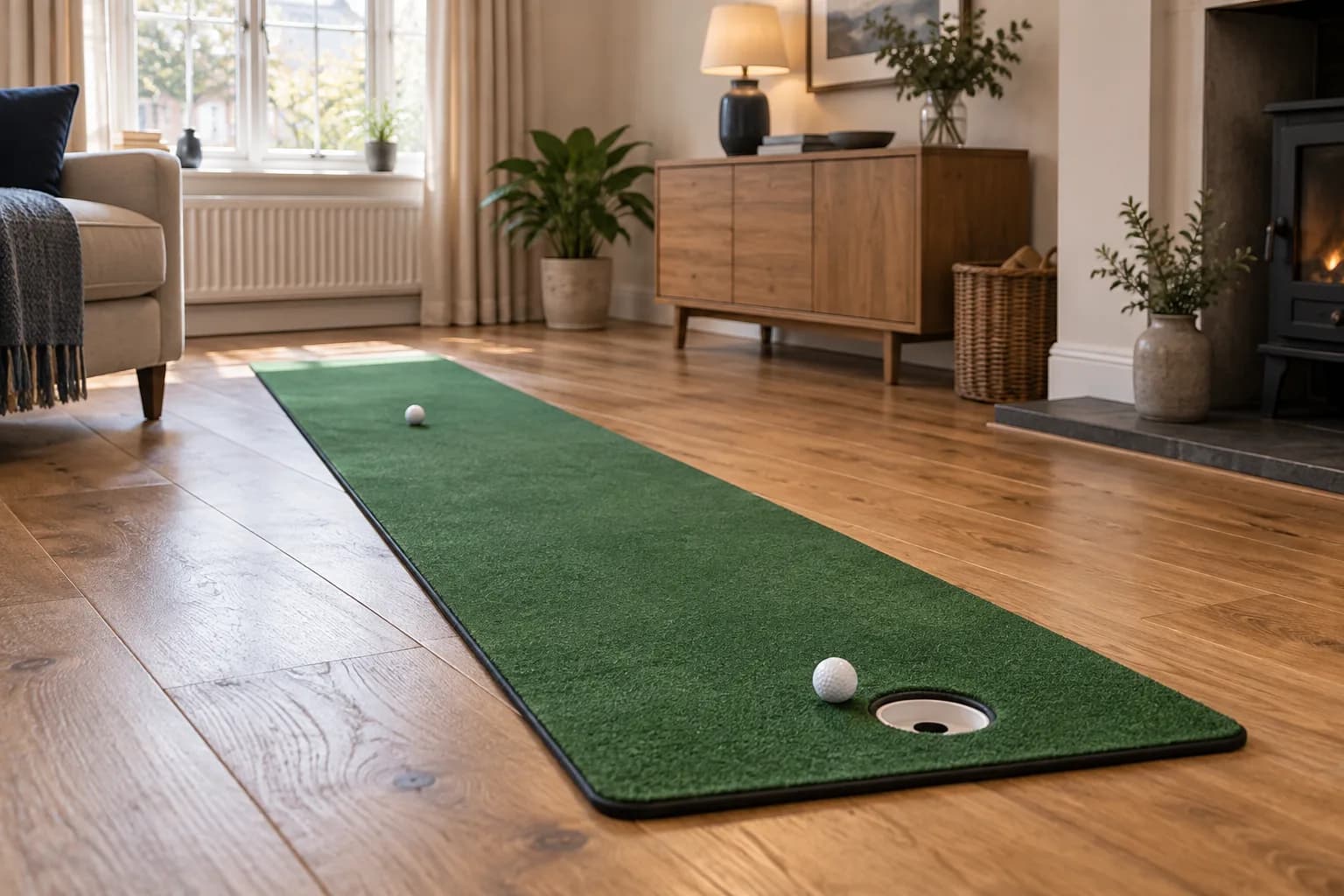
Line
Start direction and green reading decide the path. A straight indoor line can reveal whether the ball begins where intended, but it cannot teach the break of a sloping green.
Pace
Pace control means producing the required roll distance on the surface in front of you. The same stroke can finish differently when friction, moisture, slope or grass changes.
Home Caddie baseline
PGA coaching uses different starting distances and a target zone to train speed control. The exact score below is Home Caddie’s repeatable home version—not a recognised handicap or performance benchmark.
Make a finish zone about one putter-length deep. Removable tape or mat markings are enough.
Use near, middle and far positions that still allow a normal stance and safe follow-through.
Putt once from near, middle and far, then repeat four times. Score one when the ball stops in the zone.
Record a total out of 12 plus the surface and start distances so the next result is comparable.
Measurable progression
The 8/12 threshold and zone change are Home Caddie practice rules. They create consistency; they do not predict fewer putts on the course.
Surface rule
A repeatable carpet or mat can show whether you produce different roll lengths. It cannot reproduce every course green. Keep the surface flat, clean and unchanged during a test block.
Use the roll you actually have
Use three starts about 60cm apart and one finish zone. You are training distinct short rolls, not pretending to practise a long lag putt.
Use four starts spread across the available length. Keep the same finish zone so only the required roll changes.
Add a genuinely longer station, but retain short and middle starts. Long-only practice can hide whether you can change distance deliberately.
If stance, doorway or storage clearance is the constraint, use the small-room measurement guide first.
Equipment decision
Buy nothing
Use removable markers and a finish zone when the ball rolls safely and consistently. Equipment is not the score.
Consider a mat
A mat helps when carpet seams, changing rooms or setup time prevent comparable sessions. Compare usable length and storage.
Compare putting mats →Consider a pressure target
PuttOUT says its Pressure Trainer returns made putts by the distance they would have passed the hole and retains only a specific line-and-pace result in its micro-target. That adds consequence to short practice; it does not replace varied-distance or outdoor work.
Home Caddie has not physically tested these products. Product behaviour is attributed to the manufacturer; selection remains based on published specifications.
Outdoor transfer check
The USGA measures green speed through controlled ball-roll distance and notes that playing characteristics vary with conditions and over time. Before a round, roll balls to a fringe or finish zone from several distances before aiming at holes.
Checked 24 September 2026. Finish-zone and changing-distance principles come from PGA coaching. Green-speed measurement and variability come from the USGA. The 12-ball score, 8/12 progression rule and zone reduction are Home Caddie’s own framework.
Return to the putting-practice hub or read how Home Caddie recommends.